 Image 1 of 1
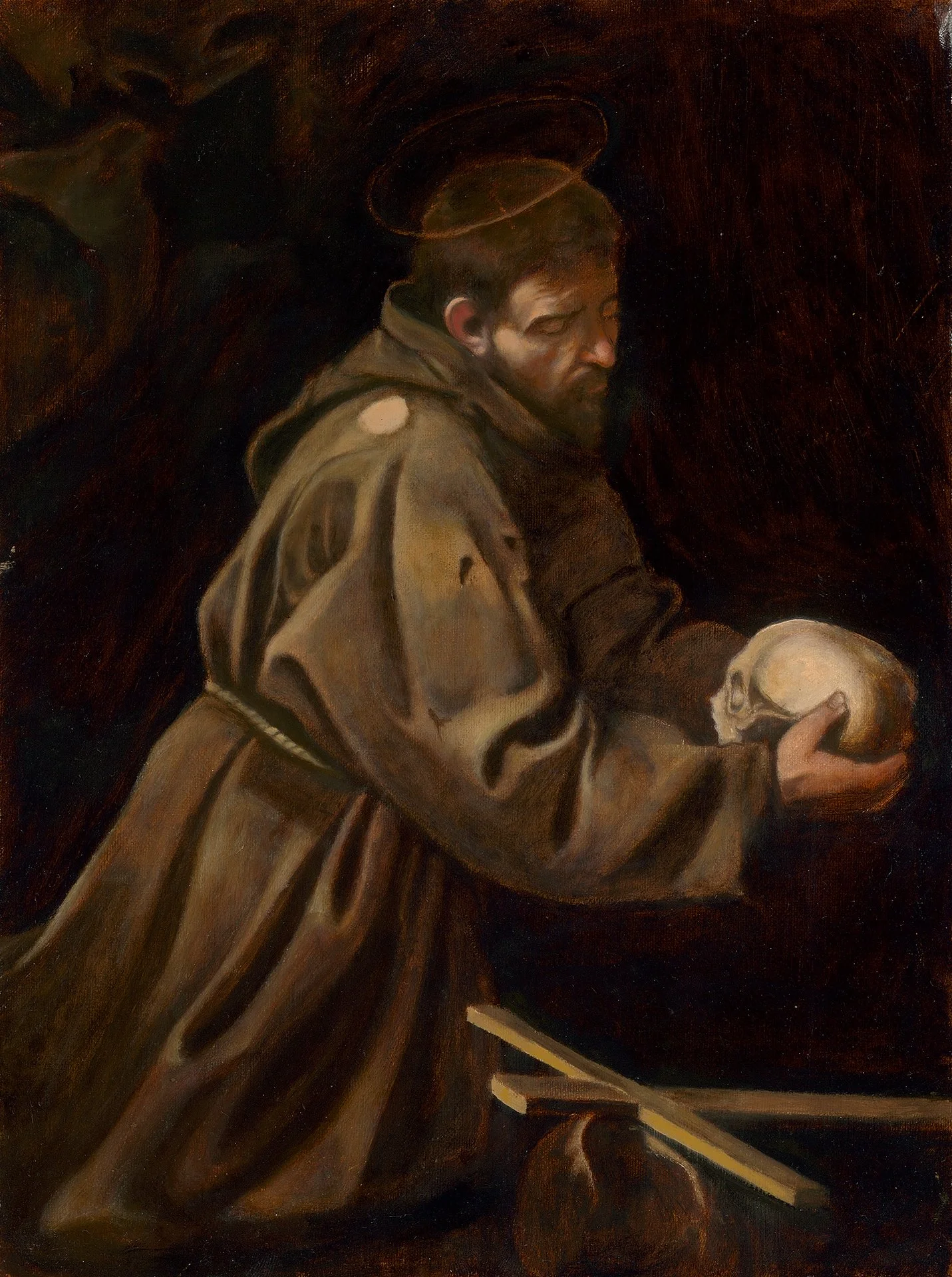
An original Master Copy of Caravaggio’s "Saint Francis of Assisi in Meditation" (c. 1603 or 1605) is a haunting masterpiece that captures the essence of the Counter-Reformation at its height. It shifts the focus from the grand, external miracles of sainthood to a raw, psychological inwardness of contemplation.
The painting is a masterclass in tenebrism—the use of extreme contrasts between light and dark to create a sense of high drama and spiritual weight. The painting places familiar symbols of Christianity in a context that was revolutionary at the time.
The Subject: Unlike earlier Renaissance depictions of St. Francis (which often showed him receiving the stigmata in a bright landscape), Caravaggio places him in a dark, nondescript space. He is dressed in a coarse, patched brown habit, emphasising his vow of poverty.
The Skull: Francis is cradling a human skull, a classic memento mori (remembering that you must die). His gaze is fixed upon it, suggesting a deep contemplation of mortality and the four last things- death, judgement, heaven, and hell.
The Cross: A simple wooden cross leans against a rock. The way Francis’s hand rests near the skull while looking toward the cross creates a visual bridge between death and the hope of the Resurrection.
The Stigmata: If you look closely at his hands, Caravaggio includes the faint marks of the stigmata. However, they are subtle and fleshy, grounding the divine miracle in a very human reality.
Caravaggio’s "dirty realism" is on full display here. He doesn't paint a perfected, ethereal saint; he paints a man who looks like he has lived a life in deep poverty.
Medium: Oil on an oil-primed Artefex aluminum-backed linen panel
Dimensions: 9" x 12"
Condition: Newly painted, unframed
Technique: Painted using traditional layering methods to achieve the depth and glow of the original 17th-century masterpiece.
"This is not just a reproduction; it is a study in light, shadow, and the human struggle to capture the divine."