 Image 1 of 1
The Inspiration of St. Matthew
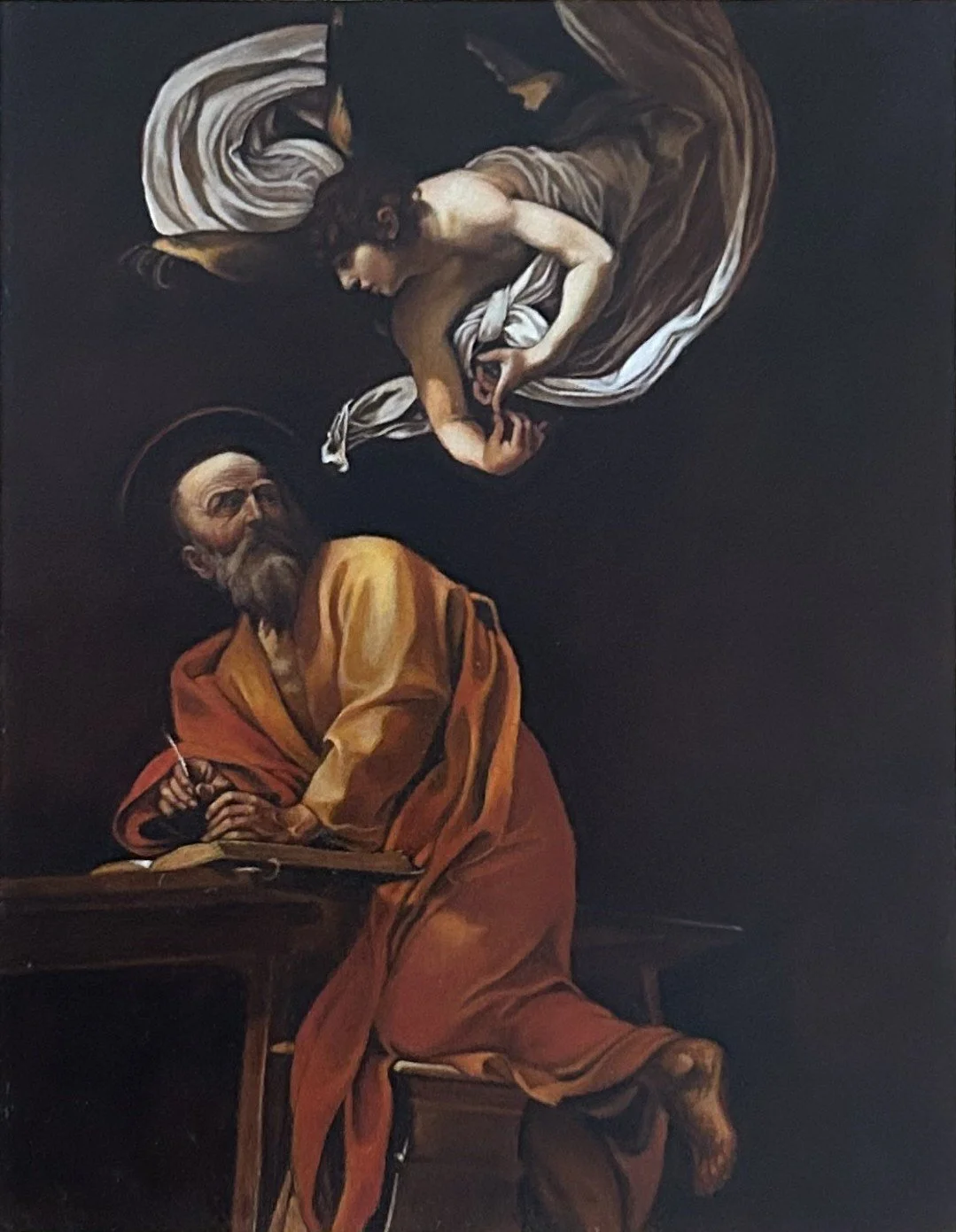
Bring the dramatic intensity of the Italian Baroque into your home with this hand-painted master copy of Michelangelo Merisi da Caravaggio’s 1602 masterpiece. This work captures the fleeting moment of divine intervention, rendered with the same raw realism and "inky" atmosphere that made the original a pivot point in art history.
Key Features & Artistic Details
Dynamic Chiaroscuro: Expertly rendered using Caravaggio’s signature tenebrism, this painting features a deep, obsidian background that pushes the figures into a brilliant, theatrical spotlight.
Divine Interaction: The composition centers on the urgent dialogue between the celestial angel—wrapped in swirling, sculptural white drapery—and the Apostle Matthew.
The "Breaking" of the Fourth Wall: This copy faithfully recreates the famous teetering stool, designed to jut into the viewer’s space, bridging the gap between the sacred scene and where you stand.
Rich Materiality: From the vibrant orange and cinnabar tones of Matthew’s robes to the weathered, human details of his expression, every brushstroke emphasizes the "dirty realism" that defined the Counter-Reformation.
Specifications
Medium: Oil on an oil-primed Artefex aluminum-backed linen panel
Dimensions: 9" x 12"
Condition: Newly painted, unframed
Technique: Painted using traditional layering methods to achieve the depth and glow of the original 17th-century masterpiece.
"This is not just a reproduction; it is a study in light, shadow, and the human struggle to capture the divine."
Caravaggio’s "The Inspiration of Saint Matthew" (1602) is a masterstroke of Baroque art, but its history is as dramatic as the painting itself. It was actually the second version Caravaggio painted for the Contarelli Chapel in Rome; the first was rejected for being "too human" and disrespectful.
In this finalized version, Caravaggio finds a perfect balance between the divine and the earthbound. The painting depicts the moment the Apostle Matthew is inspired to write his Gospel. Caravaggio uses a vertical composition to emphasize the connection between Heaven and Earth.
The Angel: Descending from the top right, the angel is wrapped in swirling white drapery that mimics the curves of a cloud. Unlike the first version (where the angel physically guided Matthew's hand), here the angel stays in the air, using a counting gesture with his hands—likely outlining the genealogy of Christ that opens Matthew’s Gospel.
Saint Matthew: Matthew is caught in a moment of frantic inspiration. He has rushed to his desk, his orange and red robes billowing. He looks up at the angel with wide-eyed intensity, his pen poised over the page as if trying to keep pace with the divine dictation.
The Tipping Stool: One of Caravaggio's most famous "tricks" is the wooden stool Matthew sits on. It teeters over the edge of the stone plinth, seemingly jutting out into the viewer's physical space. This breaks the "fourth wall," making you feel like you are standing right in the room with the saint.
The inspiration of St. Matthew incorporates several key features of Caravaggio’s paintings.
Chiaroscuro and Tenebrism: The background is a void of absolute darkness. This "spotlight effect" ensures there are no distractions; the only things that exist are the messenger, the writer, and the word.
Color Palette: Caravaggio uses a rich, warm palette. The vibrant orange of Matthew's cloak contrasts sharply with the ethereal, cool white of the angel’s robes, visually separating the mortal from the divine.
Realism: Despite the heavenly subject, Matthew looks like a real man—balding, with a weathered face and bare feet. This was Caravaggio's signature: bringing the "supernatural" down to the level of the common person.